Concrete Slab & Foundation Work
Build a solid foundation that supports your structure for decades with proper site prep and expert installation.
Why Foundation Work Matters
Your foundation is literally what everything else rests on. A poorly built foundation creates problems you'll deal with for the life of the structure. Walls crack, doors stick, floors slope, and moisture seeps in. Fixing foundation problems after the fact costs far more than doing it right the first time.
Whether you're building a new garage, adding a shed, constructing an addition, or pouring a slab for equipment, the foundation determines how well that structure performs. A level, properly reinforced concrete foundation distributes weight evenly and resists settling. It keeps your structure stable through Connecticut's freeze-thaw cycles and heavy snow loads.
Foundation work isn't glamorous, and most people never see it once construction finishes. But it's the most important part of any building project. We've seen too many situations where someone tried to save money with marginal foundation work, only to spend thousands more later dealing with the consequences. Quality foundation work gives you peace of mind in Hamden, CT that your investment is protected.
The right foundation type depends on your project and site conditions. Slab-on-grade works well for garages, sheds, and additions where you don't need a basement. Frost walls and footings support structures that need deeper foundations below the frost line. We evaluate your specific needs and recommend the approach that makes sense for your project, soil conditions, and budget.
Site Preparation and Soil Conditions
Foundation problems usually start with poor site prep or unstable soil. You can pour perfect concrete, but if the ground underneath isn't prepared correctly, you'll have issues. We take site preparation seriously because it's the difference between a foundation that lasts decades and one that settles and cracks within a few years.
Understanding Your Soil
Connecticut has varied soil conditions. Some areas have good dense soil that provides excellent support. Others have clay that expands when wet and contracts when dry, creating movement. Rocky soil requires different prep than sandy soil. We evaluate what you're working with before designing the foundation.
Unstable or organic soil gets excavated and replaced with engineered fill. This might seem like extra work, but it's essential. Topsoil, old fill, or soft material will compress under the weight of your structure. That compression happens unevenly, causing the foundation to settle and crack. We remove anything questionable and replace it with compacted gravel or crushed stone.
The Excavation and Base Process
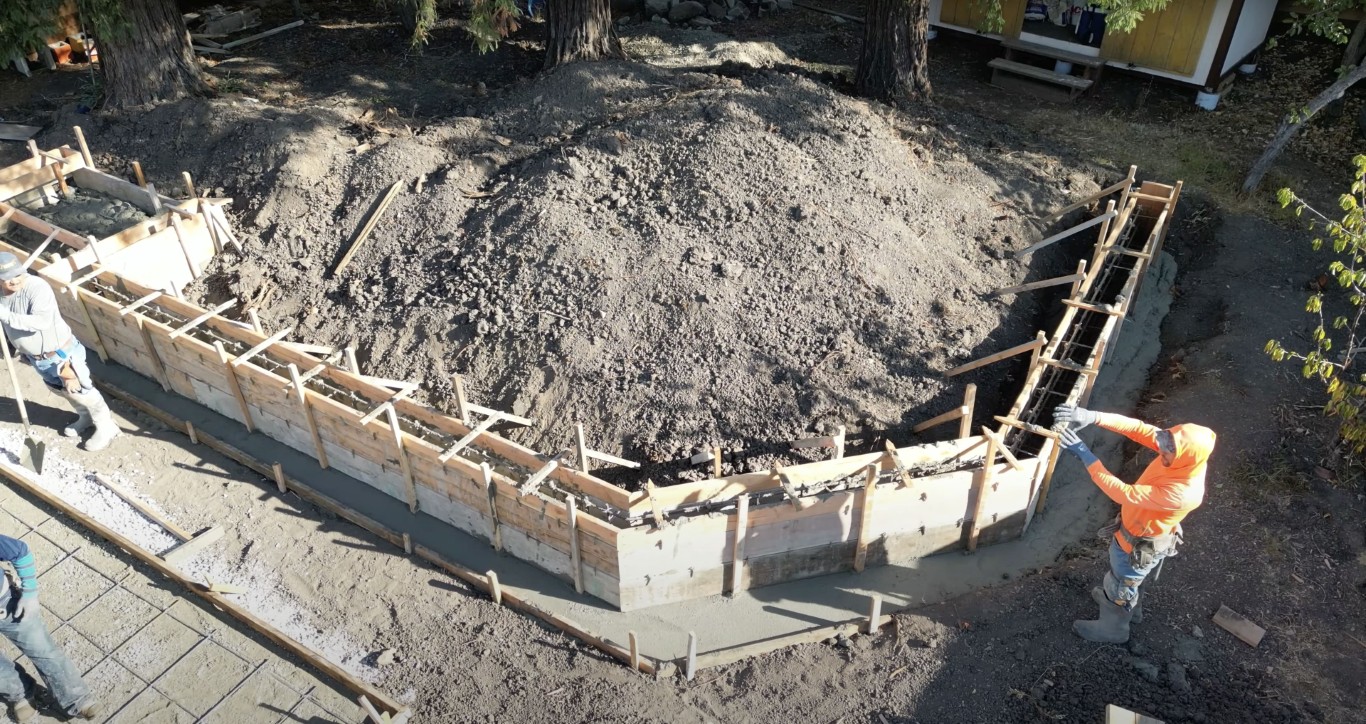
Proper excavation means digging to the right depth for your frost line and project requirements. In our area, footings need to go down at least 42 inches below grade to get below where ground freezes. Shallower foundations risk frost heave pushing them up and causing damage. For slab-on-grade projects, we excavate deep enough for the gravel base and the slab thickness.
The gravel base provides drainage and a stable, uniform support surface. We typically use 4 to 6 inches of crushed stone for slabs, more for areas with poor drainage or unstable soil. This material gets compacted in layers with proper equipment. Each layer gets compacted before adding the next. Simply dumping gravel and raking it flat doesn't provide adequate compaction. Proper compaction prevents settling that would crack your concrete later.
- Soil evaluation before excavation starts
- Removal of unstable or organic material
- Excavation to proper depth for frost protection
- Compacted gravel base for drainage and support
- Level, uniform surface ready for concrete
- Proper slope for water drainage away from structure
- Vapor barrier installation where needed
Reinforcement and Concrete Placement
Concrete is strong under compression but weaker under tension. That's where steel reinforcement comes in. Rebar or wire mesh helps concrete resist cracking and adds tensile strength. Every foundation we pour includes proper reinforcement specified for the load it will carry.
For slabs, we use wire mesh or rebar grid positioned in the middle of the slab thickness where it does the most good. For footings and foundation walls, rebar runs both horizontally and vertically to handle different stress directions. The reinforcement gets positioned on chairs or supports that keep it at the right height during the pour. Steel sitting on the ground or too close to the surface doesn't help and can actually cause rust staining.
The concrete mix matters as much as the reinforcement. We use the correct PSI rating for your application. Footings and foundation walls typically need 3000 to 4000 PSI concrete. The mix includes air entrainment to help it survive freeze-thaw cycles. Using the wrong mix or watering it down to make it easier to work compromises strength and durability.
Placement technique affects the final result. We pour concrete continuously when possible to avoid cold joints where separate pours meet. The concrete gets consolidated to remove air pockets that would create weak spots. We work the concrete around reinforcement and into corners. Surface finishing depends on what's going on top. A slab that will be exposed gets finished smooth or with texture. One that's getting tile or other flooring just needs to be level and properly cured.
Control joints manage where cracks occur as the concrete cures and experiences temperature changes. These joints create weak points where the concrete will crack in a controlled, straight line rather than randomly across your slab. We space them properly based on slab thickness and size. For larger concrete projects, proper jointing is essential for long-term performance.
Curing is the final critical step. Concrete needs moisture and the right temperature to develop full strength. We protect fresh concrete from drying too fast or getting too cold. This might mean covering it with plastic, applying curing compound, or using blankets in cool weather. Concrete gains most of its strength in the first week but continues curing for 28 days. Rushing this process by loading the foundation too soon risks damage. We give you specific timing for when you can proceed with construction on the new foundation.
Common Questions About Foundation Work
Need Foundation Work Done Right?
Let's discuss your project requirements. We'll evaluate your site, explain your options, and provide a detailed quote.
Call (203) 884-8612